
The Frame Series - #3
The power of pause: Why understanding must precede action

In Failed States and How Not to Fix Them, Rory Stewart shares stories from his time as the UK Minister of State for Africa, reflecting on the billions spent on aid efforts that often yielded dubious results.
“In many cases, we are dedicating ourselves to impossible projects... leaving aside the deep moral problems with intervention, we cannot grasp the sheer practical implications of being on the ground where we don’t even begin to understand the local structures,” he writes.
This observation highlights one of the most fundamental insights of systems thinking: the danger of acting before understanding. Whether we’re talking about billion-dollar aid initiatives or smaller organisational change projects, the temptation to jump straight into action is strong. We often become fixated on our vision, eager to prove that our solution will make all the difference. But many leaders, in their haste, can find themselves leaping before they’ve truly looked.
A CEO I recently worked with had his own cautionary tale. He recounted how, despite his best intentions, he inadvertently set back a crucial change effort by years. His misstep? Failing to fully understand the structures and incentives of his counterparts across the country before diving in.
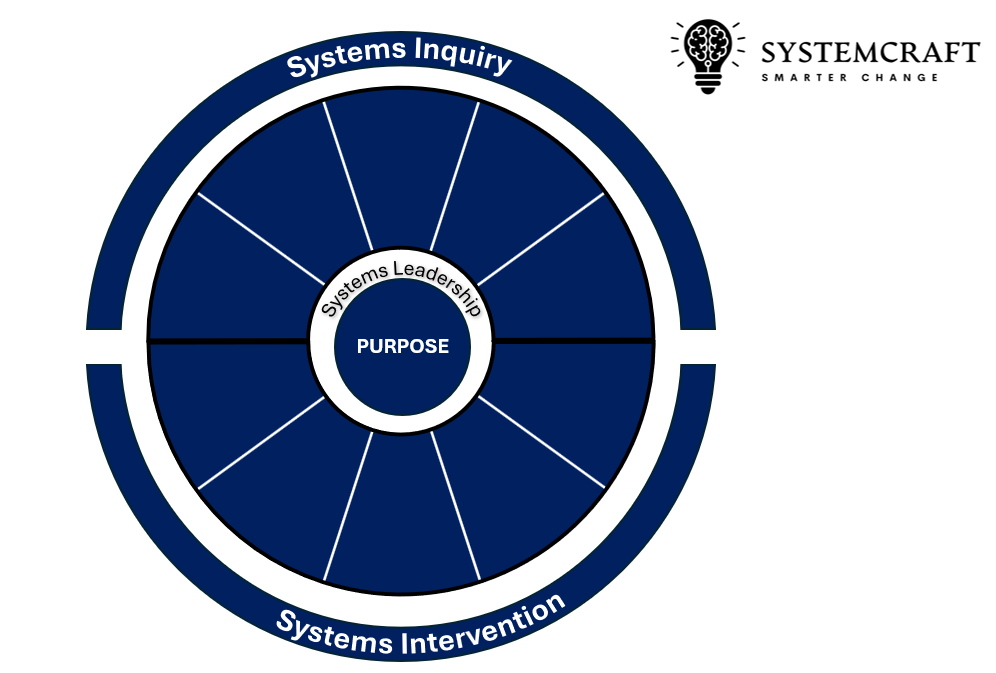
That’s why the Systemcraft™ framework revolves around two core cycles: Systems Inquiry and Systems Intervention. While my previous posts have emphasised a non-linear approach to systems thinking, the principle of understanding before acting remains at its heart.
Systemcraft as a Discipline of Inquiry
Understanding the terrain isn’t just about gathering data. It’s about engaging in meaningful dialogue with stakeholders, observing how different parts of the system interact, and staying open to insights that might come from unexpected places.
If Systems Inquiry feels like it slows things down, that’s exactly the point. It’s a deliberate pause—one that allows space for reflection, deeper understanding, and more strategic thinking.
Systems Inquiry and Systems Intervention in the Literature
The Systems Inquiry and Systems Intervention structure is not entirely new. It aligns with Jackson’s (2024) EPIC framework, particularly the stages of Exploring the Situation and Producing an Intervention Strategy. Jackson, in turn, traces these stages back to the broader traditions of systems thought and the general "problem-solving mentality" (p. 77).
However, Systemcraft™ takes a slightly different approach. Rather than rigid stages, it offers prompts—designed to spark conversation, reflection, and decision-making. These prompts can lead to action or send you back to reconsider your next move.
What’s Next
Now that I’ve laid out the basic structure, in the next posts, I’ll dive deeper into each of the ten prompt questions that drive Systemcraft™.
I’d love to hear your thoughts!
References
Jackson, M. C. (2024). Critical Systems Thinking: A Practitioner’s Guide (First edition.). Wiley.
YaleUniversity. (2018). Rory Stewart OBE: “Failed States - and How Not to Fix Them.” In YouTube.